
PLATFORM
Assistants for your workflows
A good assistant knows their task, uses approved resources, and works within clear boundaries. AIDA combines these steps into a comprehensible process.
Discuss your use case ↗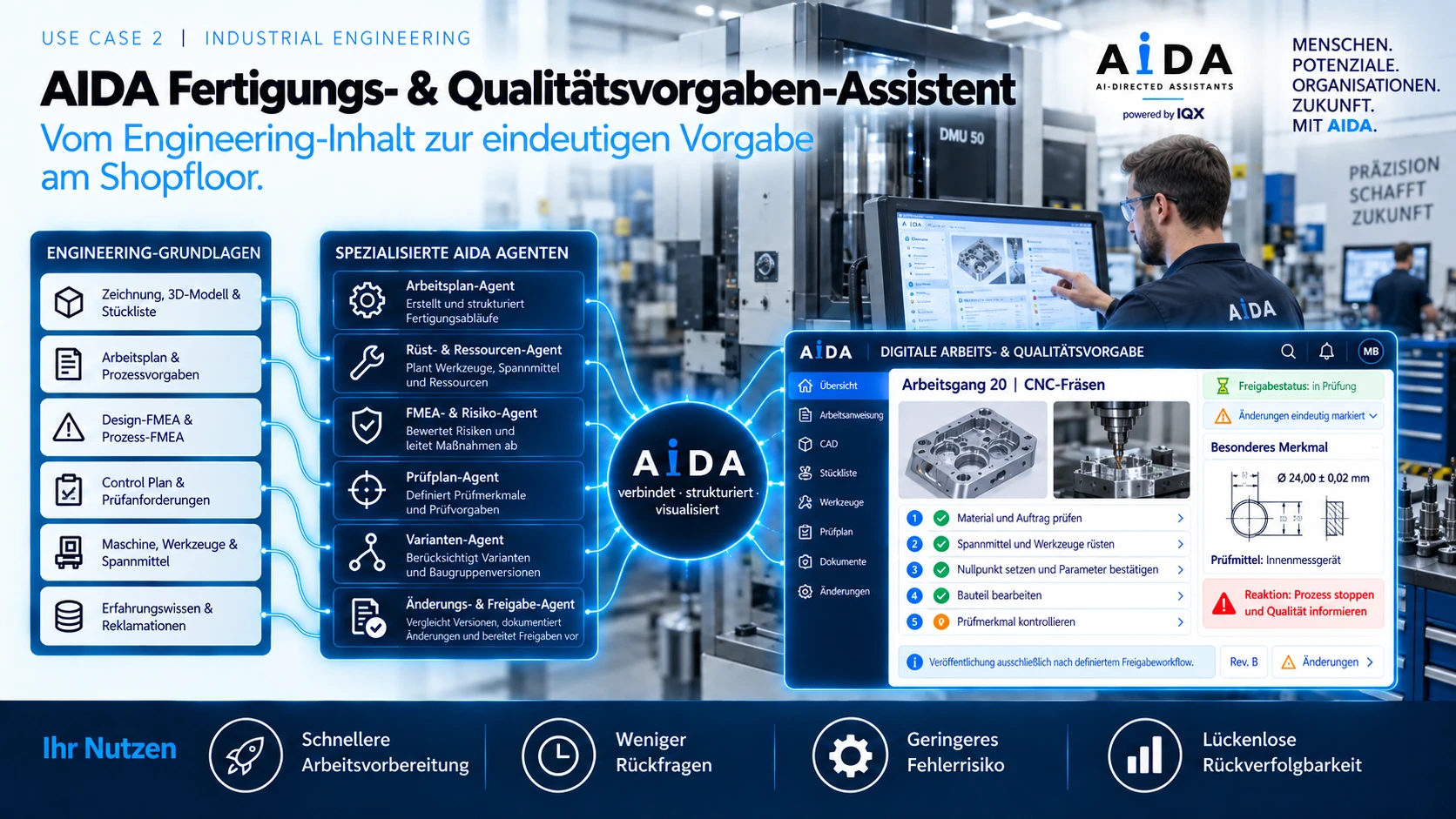 View larger image ↗
Describe the task technically
We begin with a recurring task: for example, preparing a shift meeting, a proposal, or an audit package. The outcome, users, and technical quality criteria are clarified first.
Break the process down into verifiable steps
An assistant can compile information, identify missing data, and prepare a result for review. Suitable models and tools are selected for each step. A transparent interim report facilitates queries and corrections.
Limit tools and access
Read access, a calculation run, and a change in the ERP system are distinct actions. The process defines which actions are permitted. Access data and permissions are managed via the designated infrastructure.
Consider releases and exceptions
A missing source, contradictory data, or an unusual deviation must not simply be ignored. Inquiries and escalations are part of the process. Professional responsibility and binding commitments remain with the responsible individuals.
Gradually integrate it into everyday life
In the pilot phase, we begin with limited tasks and clearly defined checkpoints. Only once the process and its exceptions are understood will the scope be expanded. Benefits and any necessary follow-up work will be evaluated jointly.