
CASE STUDIES
A rush order changes the production plan
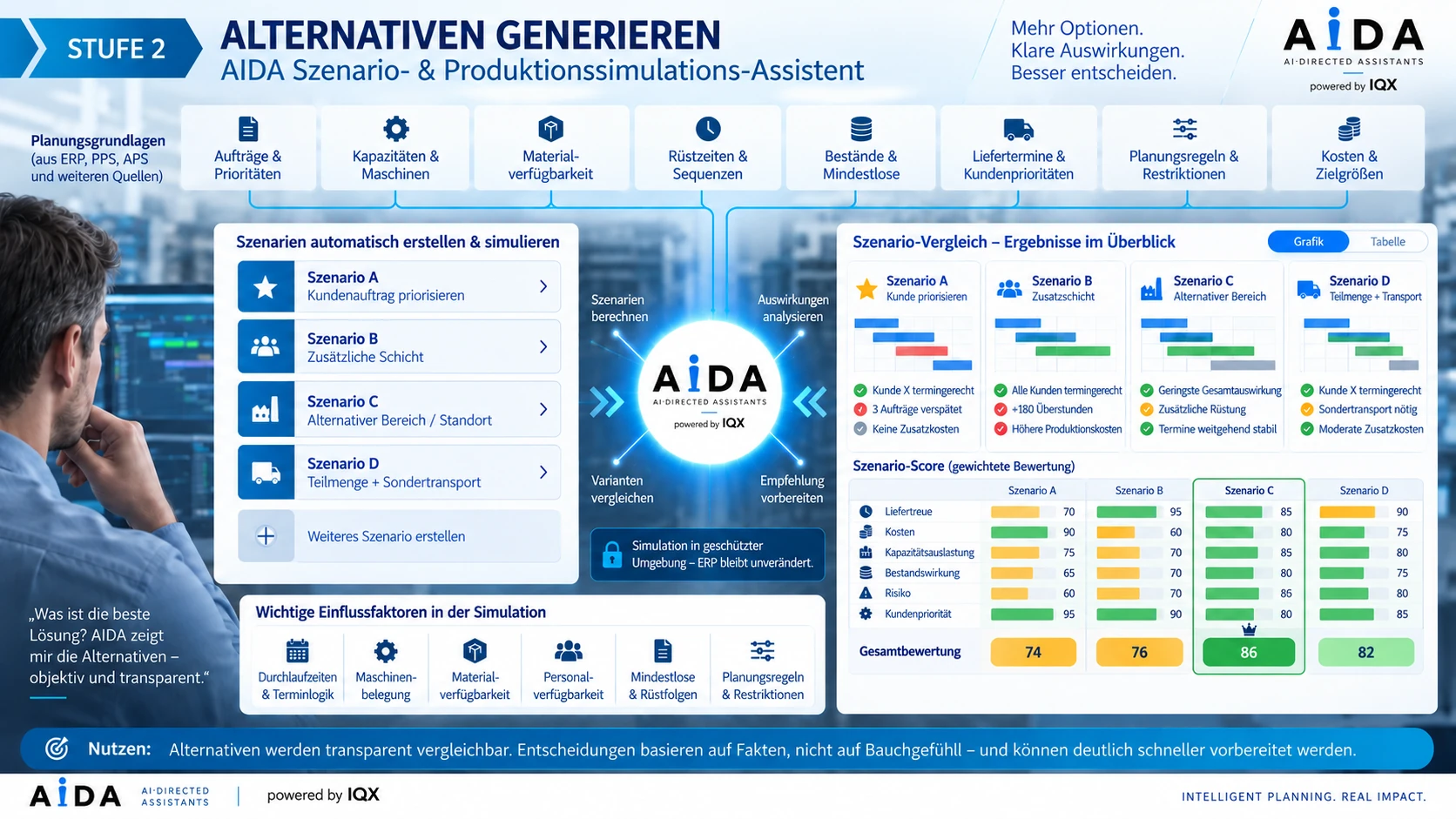
A medium-sized manufacturing company needs to prioritize a customer order. Planning, materials, and shift staffing must be reviewed jointly.
 View larger image ↗
ILLUSTRATIVE CASE STUDY · NOT A CUSTOMER REFERENCE
The starting point
The rush order only appears to fit into the machine schedule. A material delivery is in short supply, a required qualification is not available in every shift, and a follow-up order would be completed later. The information is scattered across different systems.
This is how the process is intended to work
-
Compile order situation
The assistant compiles the released order, material and capacity information and identifies missing details.
-
Prepare alternatives
A suitable planning tool calculates agreed-upon scenarios. AIDA helps to clearly present the assumptions and differences.
-
Compare consequences
The team is reviewing affected delivery dates, material shortages, and shift staffing. Unresolved assumptions are explicitly highlighted.
-
Approve plan from a technical perspective
The responsible planner makes the decision. Data is only transferred to the ERP system to the agreed extent and after approval.
The prepared result
The end result is a verifiable basis for decision-making, including alternatives and open questions. Whether the preparation process becomes faster and more comprehensive will be measured in the pilot phase based on agreed-upon tasks.
Data and responsibility
Scenario preparation does not initially change any production planning data. Access and write-back actions follow the agreed authorization and release framework.
View larger image ↗